
Greensboro's African American Community Newspaper since 1967
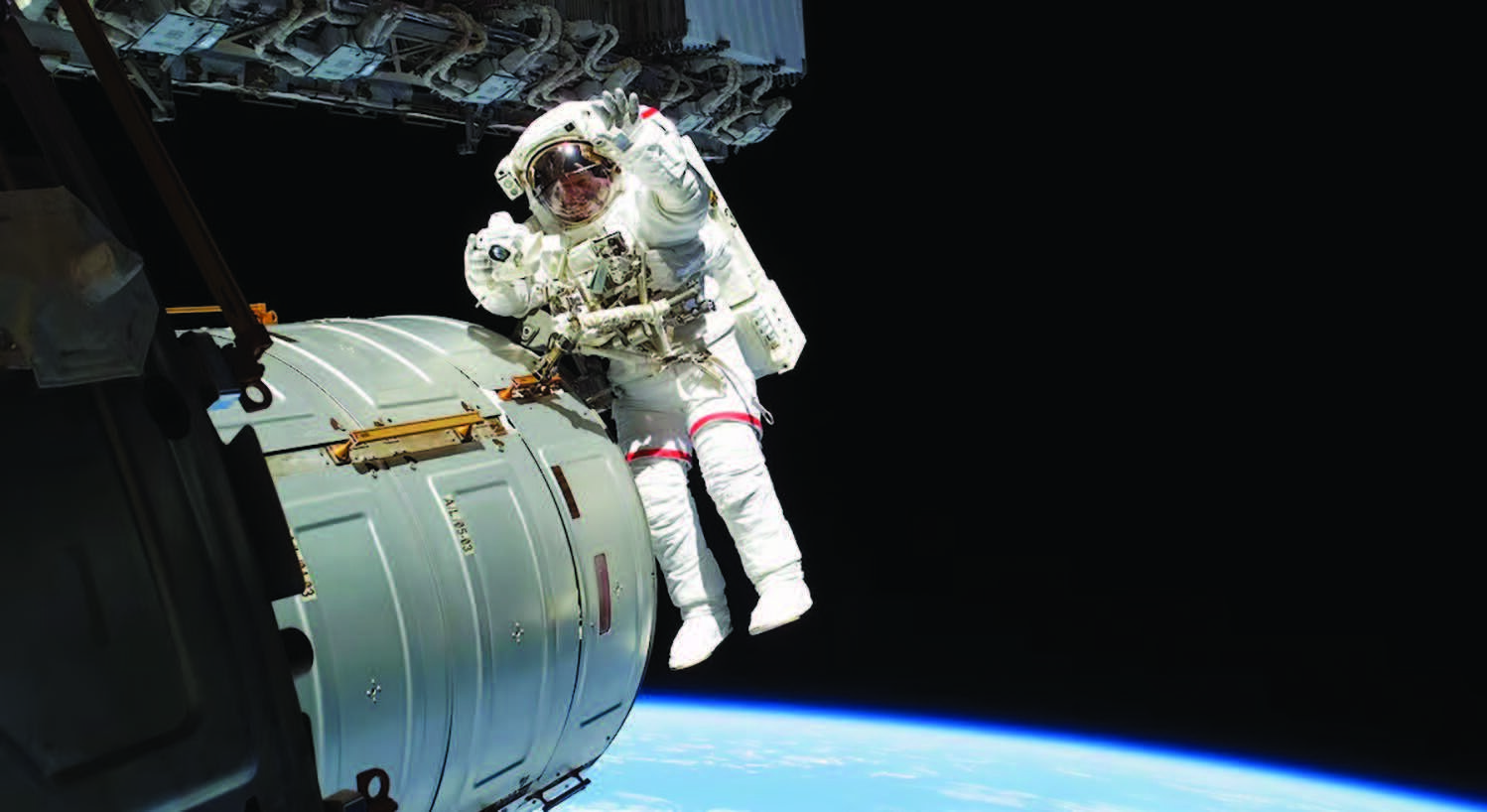
As men and women embark upon returning to the moon and venture beyond, we may want to pause to consider how being in space affects the body. Does it make any difference when the body that is so accustomed to the gravitational pull here on earth goes without it? If there are problems, do they resolve once back here on earth? Or are there long-term problems associated with flying in space, to the moon and beyond?
Astronauts are trained to help prevent these changes, but yes, impressive changes do happen to the body in space.
The bones and muscles of the legs and spine that support the body’s weight stop working. This results in loss of bone and muscle strength. This loss is accelerated in space and results in an accelerated form of osteoporosis and sarcopenia, a loss of muscle mass.
The heart does not work as well, and we see fluids shift to the upper part of the body. The heart has less resistance and becomes deconditioned. This can result in dizziness or fainting when astronauts return to Earth.
The nervous system, especially the inner ear, becomes disoriented without gravity. This results in astronauts having vertigo or walking into walls when they return to Earth.
Some astronauts have reported visual problems due to changes in intracranial pressure.
There are also problems with the immune system, metabolism, and, of course, with sleep.
The astronauts are in tip-top shape when they go into space and maintain a two-hour daily exercise regimen to help prevent these changes. They usually go into a rehabilitation phase after returning from space to regain their muscle mass and bone loss.
Male astronauts will have more problems with visual changes and changes from intracranial pressure. While female astronauts experience more dizziness and balance issues. There is limited evidence about fertility, but pregnancies are hopefully planned well before or well after time in space.
Beyond the Earth’s atmosphere, astronauts face a barrage of space radiation. This exposure can cause critical DNA mutations, significantly raising the lifelong risk of developing cardiovascular disease and various forms of cancer.
This has led to the development of lifelong follow-up programs to detect cancers and heart disease. There are also studies looking at the mental health, radiation effects on memory and executive functioning, as well as the effects of isolation in space, among others. We do not fully understand how space affects people. With what we do know, new procedures are in place to implement countermeasures to reduce the risks we are aware of and to discover others.
Flying in space does not come without risk.
Dr. Veita Bland is a board-certified Greensboro physician and hypertension specialist. Dr. Bland’s radio show, “It’s a Matter of Your Health,” can be heard live on Wednesdays, 5:30 p.m. on N.C. A&T State University’s WNAA, 90.1 FM. Listeners may call in and ask questions. The show is replayed on Sirius 142 at 5 p.m. on Wed. Email Dr. Bland at ideas@blandclinicpa.com.


